Battery Energy Storage (BESS)
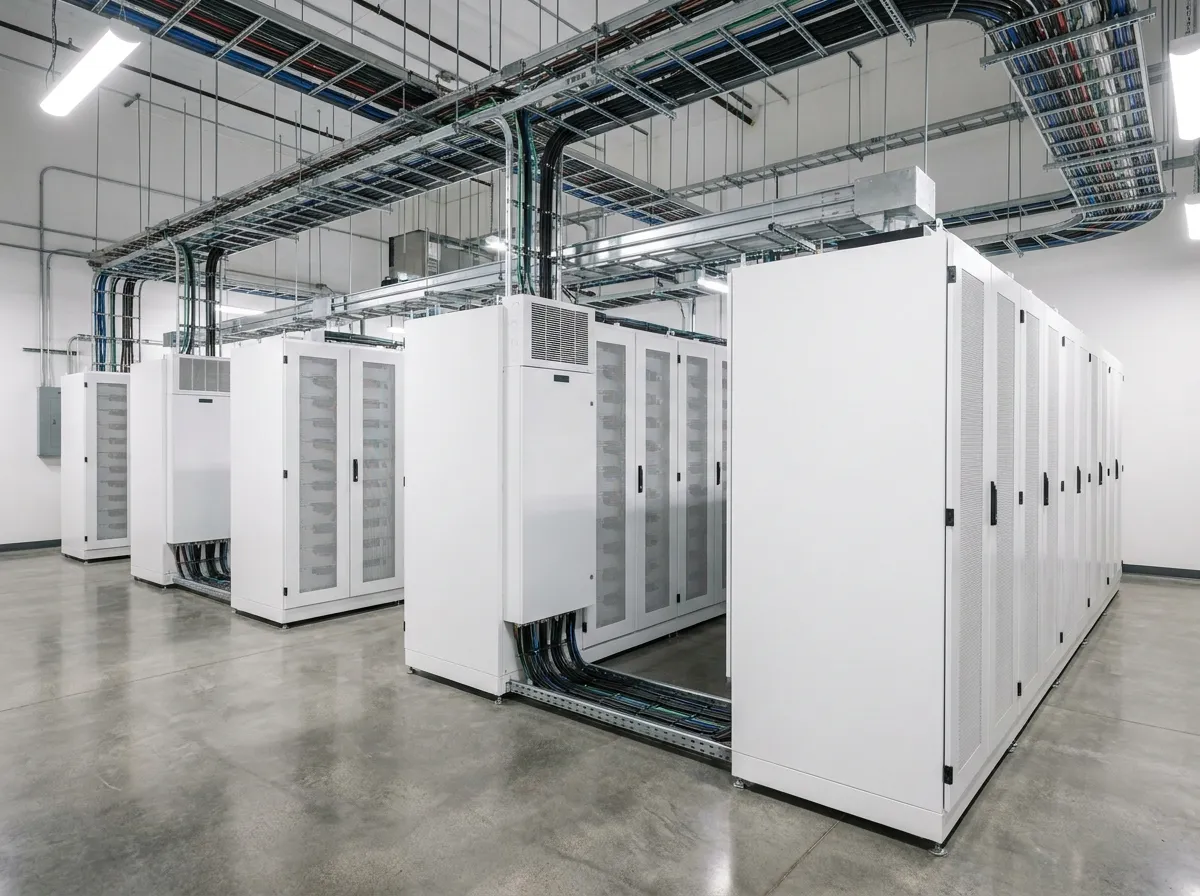
Solar panels only produce while the sun is up. Batteries turn a PV system from a daytime bill-cutter into a dependable energy system available any time — storing surplus production, covering night load, and shielding production lines from PLN outages.
We use LFP (Lithium Iron Phosphate) battery systems that are safe, last thousands of cycles, and suit the tropical climate. BESS is designed around three core factory needs: backup (large-scale UPS for critical lines), peak-shaving (cutting peak-demand charges), and hybrid operation (maximising solar self-consumption).
Typical commercial sizing
Our commercial BESS projects generally range from 100 kWh to 2 MWh, paired with PV and hybrid inverters to match the load profile and goal (backup vs savings).
Components & scope
- LFP battery modules with BMS, racking and cooling/ventilation.
- Hybrid inverter / PCS and integration with PV and the PLN grid.
- Fire protection, EMS and real-time battery monitoring.
Who it's for
Factories with outage-sensitive lines, facilities with high peak-demand tariffs, and sites with less stable PLN reliability — this is where BESS delivers the most value.
Timeline & O&M
Commercial BESS installation usually takes 2–5 weeks. O&M covers BMS calibration, thermal checks and battery state-of-health monitoring.
ROI
BESS ROI depends on tariff structure and the value of reliability. For peak-shaving, payback is typically 6–10 years; for critical-process backup, value is measured by avoided downtime losses.
Indicative pricing
2026 indicative benchmark for installed battery systems:
| System | Type | Indicative price |
|---|---|---|
| BESS 100–250 kWh | LFP + PCS | IDR 6–8 M / kWh |
| BESS 250 kWh – 1 MWh | LFP + EMS | IDR 5.5–7 M / kWh |
| BESS > 1 MWh | Containerized | IDR 5–6.5 M / kWh |
Indicative — request the catalog for sizing and a project quote.
BESS works best paired with PV panels and hybrid inverters. We serve factories in Karawang and Cikarang.